

Industry Q&A: Are There Different Grades of Ferrosilicon?
Quick Answer: Yes. Ferrosilicon is commonly supplied in grades such as FeSi75, FeSi72 and FeSi65, mainly distinguished by their silicon content and impurity limits. However, the grade number should not be treated as an exact silicon percentage. The acceptable composition depends on the purchase specification, and the actual batch chemistry should always be confirmed on the COA.
Q1: What Does the Ferrosilicon Grade Number Mean?
Ferrosilicon grade names mainly indicate the approximate silicon level of the alloy.
Common commercial grades include:
| Grade | General Meaning | What Should Be Confirmed |
|---|---|---|
| FeSi75 | Ferrosilicon in the mid-70% Si range | Specified Si range and impurity limits |
| FeSi72 | Ferrosilicon around the low-70% Si level | Actual Si, Al, Ca, P, S and C requirements |
| FeSi65 | Ferrosilicon around the mid-60% Si level | Required silicon range and downstream tolerance |
For example, FeSi75 does not necessarily mean exactly 75.00% silicon. It is a grade designation, and the permitted Si range can vary with the standard, contract specification or supplier production range.
This is why the grade name should be used together with the agreed chemical specification rather than as a substitute for it.
Q2: What Is the Difference Between FeSi75, FeSi72 and FeSi65?
The obvious difference is silicon content, but the practical purchasing difference is the amount of alloy needed to deliver the required silicon.
For example, before considering recovery:
- 10 kg of contained Si requires about 13.3 kg of FeSi75 at a nominal 75% Si basis.
- The same 10 kg of Si requires about 15.4 kg of FeSi65 at a nominal 65% Si basis.
That does not automatically make FeSi75 the cheaper choice. The correct comparison depends on the alloy price, actual Si content, silicon recovery and impurity limits.
A lower-priced FeSi65 can still be economical if the process accepts the higher addition quantity and its impurity profile.
Q3: Are There Special Ferrosilicon Grades?
Yes, but it is useful to separate chemical grades from product forms and related alloys.
Besides standard FeSi75, FeSi72 and FeSi65, specifications may require tighter control of individual impurities, such as:
- Low-Al ferrosilicon when aluminum input must be limited
- Low-P or low-S ferrosilicon where phosphorus or sulfur control is important
- Low-C ferrosilicon where additional carbon must be minimized
These are composition variants of ferrosilicon.
By contrast, ferrosilicon powder, granules and lump describe physical form or particle size rather than a different silicon grade.
FeSiMg should also be distinguished from ordinary ferrosilicon. It contains magnesium and is used primarily for nodularization in ductile iron production, so it is a different alloy product rather than simply another FeSi grade number.
Q4: How Should I Choose Between Different Ferrosilicon Grades?
Start with the silicon addition required by your process, then determine how much FeSi of each grade would be needed.
The comparison should include:
- Actual Si content
- Expected silicon recovery
- Al, Ca, P, S and C limits where relevant
- Particle size and fines content
- Price per tonne
- Cost per unit of effective silicon added
For example, changing from FeSi75 to FeSi65 reduces the silicon concentration of the alloy, so a larger addition quantity is normally required. Whether that change saves money depends on the price difference and process performance rather than the grade number alone.
Q5: Does a Higher Ferrosilicon Grade Mean Better Quality?
No. A higher silicon grade means more silicon per tonne of alloy, but it does not automatically mean better quality for every process.
For example, FeSi72 may be fully suitable where the process accepts its chemistry and addition rate. Paying more for FeSi75 would provide little value if the additional silicon concentration does not improve production economics or final composition control.
At the same time, two batches sold under the same FeSi75 grade can still differ in actual Si, Al, Ca and other elements while both remain within the agreed limits.
Therefore, batch consistency and actual COA results are often more useful than comparing grade names alone.
Q6: What Should I Check on a Ferrosilicon COA?
Use the COA to confirm the actual chemistry of the supplied batch against your purchase specification.
Depending on the process, this may include:
- Si content
- Al and Ca
- P and S
- C
- Other controlled elements required by the contract
If consistency is important, comparing several recent batch COAs can provide more useful information than checking a single certificate.


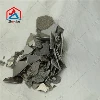
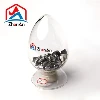
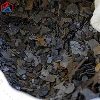
Product appearance can help identify particle size, fines and obvious contamination, but it cannot determine the ferrosilicon grade by itself. Chemical grade should be verified through the agreed specification and batch test results.
FAQ About Ferrosilicon Grades
Is FeSi75 exactly 75% silicon?
No. FeSi75 is a commercial grade designation rather than a guarantee of exactly 75.00% Si. The accepted silicon range depends on the specification or contract, so the actual batch value should be checked on the COA.
Is FeSi75 always better than FeSi72?
No. FeSi75 contains more silicon per tonne, but FeSi72 may provide better economics when its chemistry and required addition quantity are suitable for the process.
Is ferrosilicon powder a separate grade?
Not necessarily. Powder describes the physical form and particle size. FeSi powder can still be produced with different silicon contents such as FeSi75 or other specified compositions.
Is FeSiMg a ferrosilicon grade?
FeSiMg is a magnesium-containing ferrosilicon alloy used mainly for nodularization in ductile iron production. It should not be treated as another ordinary FeSi75/72/65 grade.
Why can two FeSi75 batches have different compositions?
A grade defines an acceptable composition range. Two batches can both meet that specification while having different actual Si and impurity values within the permitted limits.
Should I compare ferrosilicon by price per tonne only?
No. Compare actual silicon content, expected recovery, required addition quantity, impurity limits and delivered price. For grade substitution, cost per unit of effective silicon is usually more meaningful than tonne price alone.