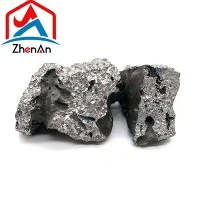
Quick Answer: Ferro titanium is an iron-titanium alloy used to introduce titanium into steel and other ferrous melts. You can use FeTi when your process requires controlled titanium addition for deoxidation, carbon and nitrogen control, grain refinement or titanium alloying.
We supply FeTi grades with different titanium and residual-element limits. For regular FeTi70, our published Ti reference is 65–75%, with particle size such as 10–60 mm or customized according to your feeding requirements.
Ferro titanium combines iron with a controlled amount of titanium so you can add Ti into molten steel more conveniently than using pure titanium metal directly.
The correct FeTi specification depends not only on titanium content. You should also check Al, Si, C, P, S and other residual elements because these limits can affect whether the material fits your steel grade and refining process.
If you need detailed chemistry and current supply specifications, see our ferrotitanium specification page .
Key Properties of Ferro Titanium in Steelmaking
Strong Affinity for Carbon and Nitrogen
Titanium reacts readily with carbon and nitrogen in molten steel. You can therefore use controlled Ti addition when your steel specification requires titanium to combine with these interstitial elements.
Grain Control
In suitable steel grades, titanium-containing precipitates can support grain-size control. This is one reason FeTi is used in selected microalloyed and specialty steels.
Deoxidation Support
Titanium also has a strong affinity for oxygen. FeTi can therefore be used in steel refining where titanium addition forms part of the deoxidation and chemistry-control practice.
Controlled Titanium Addition
Instead of adding titanium without considering the full melt chemistry, you can use FeTi as a defined titanium-bearing alloy and calculate the addition from the actual batch Ti content and expected recovery.
How Ferro Titanium Works in Molten Steel
When FeTi is added to molten steel, titanium enters the melt and reacts according to the available oxygen, nitrogen, carbon and other elements. The final result depends on your starting chemistry, Ti addition rate, temperature, slag condition and titanium recovery.
For this reason, you should not use one fixed FeTi addition rate for every heat. Use the actual Ti content on the batch COA together with your target titanium level and plant recovery data.
Required FeTi Mass ≈ Required Recovered Ti ÷ (Actual Ti Fraction × Ti Recovery)
Use your own production recovery when calculating the final addition.
Main Applications of Ferro Titanium
Steel Refining
You can use FeTi when your refining process requires controlled titanium addition for oxygen, carbon or nitrogen control. The correct timing and addition amount depend on your steelmaking route.
Titanium-Bearing Specialty Steels
FeTi is used as a titanium alloying addition in steel grades that specify a defined Ti level. You should confirm both the target Ti content and the permitted residual elements before selecting the alloy.
Stabilized Stainless Steels
In selected stabilized stainless steels, titanium can be added to combine with carbon and help control the effect of carbon in the steel. Your FeTi grade should match the chemistry limits of the final stainless steel specification.
Microalloyed and Structural Steels
You can also use titanium additions in selected microalloyed steels where precipitation and grain control are part of the alloy design. The required Ti level is normally much more important than simply choosing the highest FeTi grade.
Foundry and Other Metallurgical Processes
If your cast iron or metallurgical process requires controlled Ti addition, send us the target chemistry and addition method. We can confirm whether our available FeTi grade and particle size fit your process.

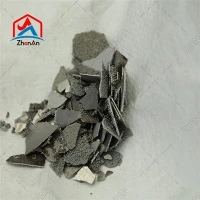
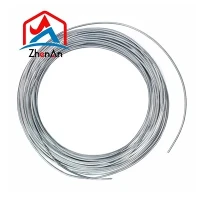
Ferro titanium alloy for controlled titanium addition
How to Choose a Ferro Titanium Grade
Start with the titanium content required by your steel process. Our current FeTi range includes FeTi grades with different Ti levels, while FeTi70 is one of our main high-titanium products.
For FeTi70, you should not select the alloy only by the 65–75% Ti range. Our FeTi70-A, FeTi70-B and FeTi70-C references use the same titanium range but have different Al, Si, C, P and S limits.
If your steel grade has strict residual-element limits, send them to us together with the Ti requirement. We can compare the complete chemistry instead of recommending the grade only from the titanium percentage.
If you mainly need a high-Ti FeTi grade, you can also review our 70% Ferro Titanium product information.
Ferro Titanium Particle Size
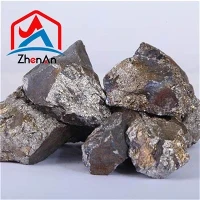
Our published FeTi reference includes 10–60 mm lumps, and we can discuss other sizes according to your feeding or addition system.
Particle size matters because excessively large pieces may dissolve differently from fine material, while excessive fines can affect handling and charging. If your equipment requires a narrow size range, send us the minimum and maximum particle size together with your acceptable undersize and oversize limits.
Ferro Titanium vs Pure Titanium for Steelmaking
Ferro titanium and pure titanium are not interchangeable products for every application. Pure titanium metal is used where titanium itself is the engineering material, while FeTi is mainly used as a titanium-bearing alloy addition in steelmaking and other ferrous metallurgy.
When you need to introduce a controlled amount of titanium into molten steel, FeTi can be easier to integrate into the alloying process because the titanium is supplied together with iron in a defined ferroalloy form.
You should still calculate the addition from the actual Ti content and expected recovery rather than assuming that FeTi70 and pure Ti can be substituted on a one-to-one mass basis.
What to Check Before Ordering Ferro Titanium
First, confirm your required Ti range. Then check the maximum Al, Si, C, P and S limits that apply to your steel grade. If nitrogen or another trace element is critical, include that value in your purchase specification as well.
You should also define the particle-size range and packing requirement. For repeat orders, use the same chemistry and size acceptance criteria so the material remains easier to compare between batches.
We can provide a batch COA so you can check the actual titanium and residual-element values against the agreed order specification.
How We Support Your Ferro Titanium Order
We confirm your Ti range, residual-element limits, particle size, quantity and packing before arranging the order. For customized requirements, send us your target specification so we can check the appropriate grade before quotation.
You can also review our broader ferroalloy product range if you need to compare FeTi with other alloying materials used in steelmaking.

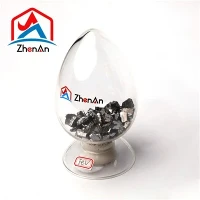
Ferro titanium lumps for metallurgical applications
Need Ferro Titanium Market Information?
This guide focuses on FeTi properties, applications and grade selection. If you also need information about raw-material supply, steel demand, energy costs and other factors that affect FeTi availability and pricing, see our ferro titanium market outlook .
What to Send Us for a Ferro Titanium Quote
Please send us your required Ti range, Al/Si/C/P/S limits, particle size, quantity, packing, application and destination port.
If you already have a target specification or previous batch COA, send it with your inquiry. We can compare the chemistry directly and confirm the suitable FeTi grade with you.
Request a Ferro Titanium Quote
Send us your required Ti content, residual-element limits, particle size, quantity and packing. We can confirm the available specification and batch COA before quotation.
Email: business@zaferroalloy.com
Request a Quote
Q: What is ferro titanium used for?
A: You can use ferro titanium to introduce titanium into steel for alloying, deoxidation, carbon and nitrogen control, and other steel-refining requirements.
A: Our published FeTi70 specification uses a Ti range of 65–75%. Different FeTi70 grades can still have different Al, Si, C, P and S limits, so you should confirm the complete chemistry before ordering.
Q: What size of ferro titanium can you supply?
A: Our current published reference includes 10–60 mm lumps. You can send us another required range together with your undersize and oversize limits for confirmation.
Q: Is ferro titanium the same as pure titanium?
A: No. Ferro titanium is an iron-titanium alloy mainly used to add titanium into steel, while pure titanium is a different material used where titanium itself is required.
Q: What impurities should I check when buying FeTi?
A: In addition to Ti, check the Al, Si, C, P and S limits required by your steel specification. If another element such as nitrogen is critical, include it in your RFQ.
Q: Can you provide a batch COA?
A: Yes. We can provide a batch COA so you can compare the Ti content and agreed residual-element limits with your purchase specification.
Q: What should I send you for a quotation?
A: Please send us your required Ti range, residual-element limits, particle size, quantity, packing, application and destination port.