






Carbon Graphite Electrode
Carbon Graphite Electrode Description
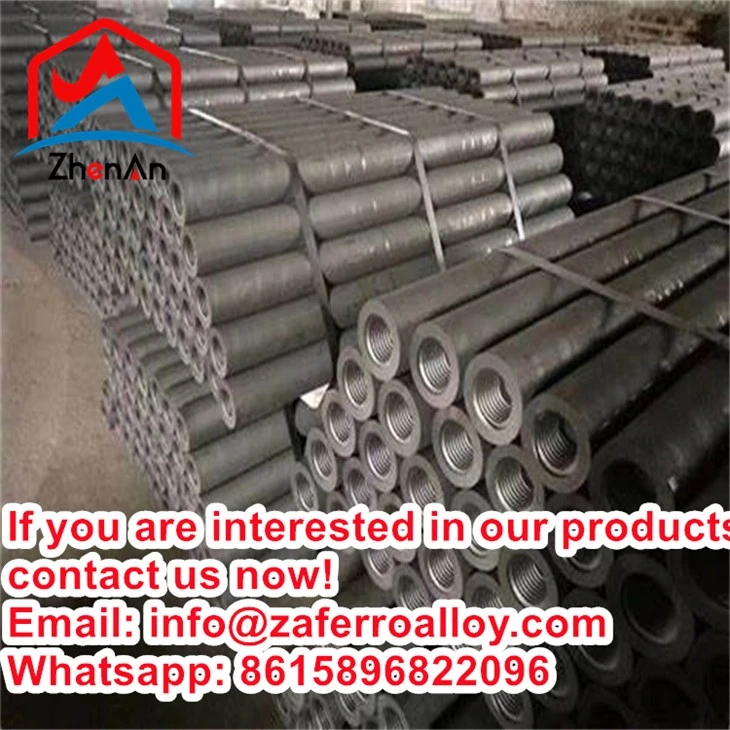
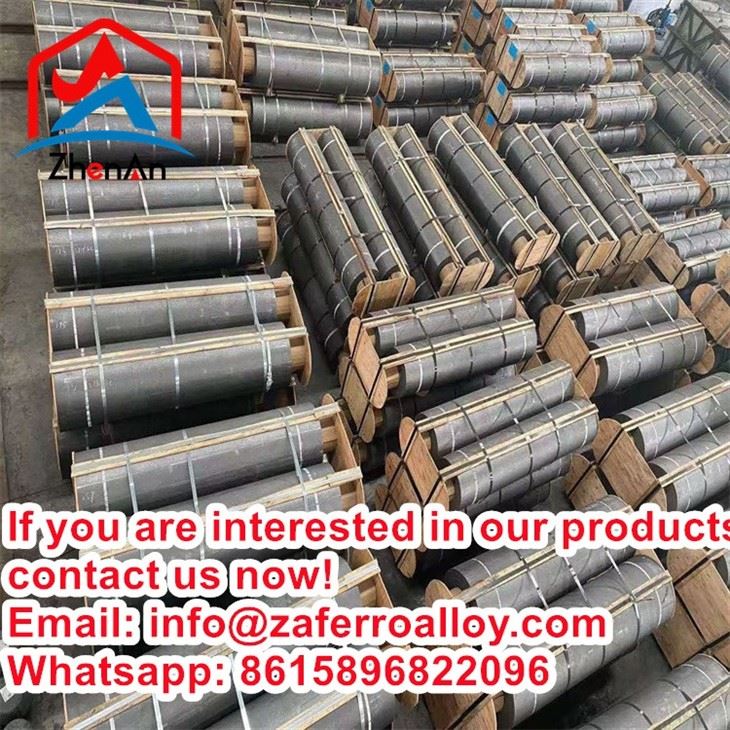
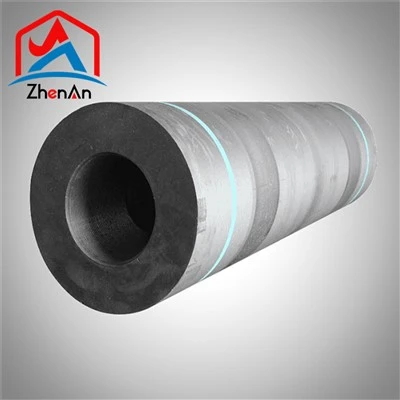
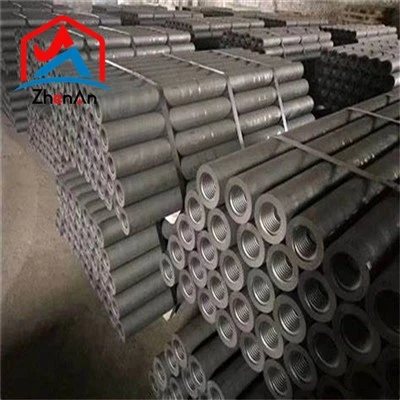
Carbon Graphite Electrodes are graphite electrodes that allow the use of current densities lower than 17 A/cm². They are mainly used in ordinary power electric furnaces for steel making, silicon making, and yellow phosphorus making.
The coefficient of thermal expansion (CTE) of carbon graphite electrodes is a critical thermodynamic parameter. A lower CTE indicates greater thermal stability and higher oxidation resistance, leading to fewer fractures and lower consumption during use. Methods to reduce the CTE include using high-quality raw materials, employing formulations with larger particle sizes, or increasing the proportion of large particles, though the latter can decrease the density and strength of the product.
Ash content refers to the amount of solid elements other than carbon graphite present in the product. The ash content in graphite electrodes is primarily influenced by the ash content of the raw materials used. Petroleum coke and needle coke have low ash content, so the ash content in graphite electrodes generally does not exceed 0.5%. Ash content within 1% does not significantly impact steelmaking, but impurities in the ash can reduce the oxidation resistance of the electrodes.
Thermal shock resistance factor is a parameter that characterizes the material's ability to withstand rapid temperature changes. It reflects the material's resistance to cracking under a given temperature gradient, an intrinsic property of the material. This factor is a crucial comprehensive indicator affecting the performance of electrodes.
The Specifications of Carbon Graphite Electrode
| ITEM | RP | ||||||
| (YB/T4088-2015) | ZhenAn Standard | (YB/T4088-2015) | ZhenAn Standard | (YB/T4088-2015) | ZhenAn Standard | ||
| 75-300 | 350-450 | 500-700 | |||||
| Electric Resistance Max.(µΩ-m) |
Electrode | 9 | 8.0 | 9 | 8.0 | 9 | 8.0 |
| Nipple | 8 | 6.0 | 8 | 6.0 | 8 | 6.0 | |
| Flexural Strength Min(Mpa) |
Electrode | 10 | 11.0 | 10 | 11.0 | 10 | 11.0 |
| Nipple | 15 | 14.0 | 15 | 14.0 | 15 | 14.0 | |
| Elastic Modulus (Max.) Gpa |
Electrode | 9.3 | 9.3 | 9.3 | 9.3 | 9.3 | 9.3 |
| Nipple | 14 | 13.7 | 14 | 13.7 | 14 | 13.7 | |
| Bulk Density (Min.) g/cm3 |
Electrode | 2.9 | 1.6 | 2.9 | 1.6 | 2.9 | 1.6 |
| Nipple | 2.7 | 1.72 | 2.7 | 1.72 | 2.7 | 1.72 | |
| C.T.E Max(100-600)℃ |
Electrode | 1.58 | 2.7 | 1.58 | 2.7 | 1.58 | 2.7 |
| Nipple | 1.7 | 2.5 | 1.7 | 2.5 | 1.7 | 2.5 | |
| Ash(Max.) °/o | Electrode | 0.5 | 0.3 | 0.5 | 0.3 | 0.5 | 0.3 |
Standard Sizes of Electrode: If special specification requirements exist, both sides consult supply & demand.
| Nominal diameter | Regular Power | ||
| mm | inch | Current carrying capacity (A) | Current density (A/cm²) |
| 75 | 3 | 1000-1400 | 22-31 |
| 100 | 4 | 1500-2400 | 19-30 |
| 130 | 5 | 2200-3400 | 17-26 |
| 150 | 6 | 3000-4500 | 16-25 |
| 200 | 8 | 5000-6900 | 15-21 |
| 225 | 9 | 6000-8000 | 14-20 |
| 250 | 10 | 7000-10000 | 14-20 |
| 300 | 12 | 10000-13000 | 14-18 |
| 350 | 14 | 13500-18000 | 14-18 |
| 400 | 16 | 18000-23500 | 14-18 |
| 450 | 18 | 22000-27000 | 13-17 |
| 500 | 20 | 25000-32000 | 13-16 |
| 550 | 22 | 28000-34000 | 12-14 |
| 600 | 24 | 30000-36000 | 11-13 |
| 650 | 26 | 32000-39000 | 10-12 |
| 700 | 28 | 34000-42000 | 9-11 |
If there are special specification requirements, both sides consult supply and demand.
Carbon Graphite Electrode Video
Applications of Graphite Electrodes
The primary function of graphite electrodes is to conduct electric current in a high temperature environment. Graphite electrodes are used in Electric Arc Furnaces (EAF) and Energy Optimized Furnaces (EOF) to melt and refine metals such as steel, aluminum and copper. Graphite electrodes offer several advantages due to their unique properties. They are highly heat resistant and can withstand extremely high temperatures without melting or burning. They also have good electrical conductivity, which means they can conduct electricity efficiently. In addition, graphite electrodes are chemically stable and can withstand a wide range of acids and bases. They have low reactivity with molten metals and do not contaminate the melting process.

Production Process of Graphite Electrode
Raw Material Selection: High-quality raw materials such as petroleum coke and needle coke are selected.
Forming: The raw materials are mixed with a binder pitch and formed into the desired shape.
Baking: The formed electrodes are baked at high temperatures to carbonize the binder and produce a hard, dense material.
Impregnation: To improve density and mechanical properties, the electrodes are impregnated with pitch and rebaked.
Graphitization: The electrodes are subjected to extremely high temperatures (around 3000°C) to convert the carbon material into graphite.
Machining: The electrodes are machined to precise dimensions and threaded to facilitate assembly in furnaces.


FAQ
Q: What is your delivery time?
A: It depends on the size/complexity of your order and our production schedule. Usually, we provide a faster delivery than the industry's average.
Q: What is the payment term?
A: Our payment terms are negotiable.
Q: I have some special requirements about specifications.
A: We have a well-rounded product range, which endows us with the capability of applying many special specifications. Please feel free to contact us with yours.
Q: Do you accept OEM services?
A: Yes, we do.
Hot Tags: carbon graphite electrode, China carbon graphite electrode manufacturers, suppliers, factory, Refractory Brick Mullite Brick, Molybdenum Matrix Electrode, Femn 65 75 High Carbon Ferro manganese, Molybdenum Crucibles, tungsten carbide tube, Ferrotungsten Alloy 70 Lump
Previous
Eaf Graphite ElectrodesNext
UHP ElectrodesYou Might Also Like




Send Inquiry