
Metal silicon powder exhibits distinct physical characteristics that determine its suitability for industrial applications. Below are the key properties:
1. Appearance
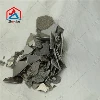
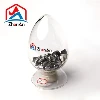
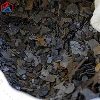
Color: Silver-gray to dark gray powder.
Luster: Dull metallic sheen (depending on purity and surface oxidation).
2. Particle Size
Standard Range: 80–325 mesh (180–45 μm).
Customization:
Coarse: 10–80 mesh (2000–180 μm).
Fine: Up to 325 mesh (<45 μm) or micron/nano-scale powders (e.g., 1–10 μm).
Shape: Irregular angular particles (crushed) or spherical (atomized).
3. Density
Bulk Density: ~0.8–1.2 g/cm³ (varies with particle size and packing).
True Density: 2.33 g/cm³ (pure silicon).
4. Thermal Properties
Melting Point: 1,414°C (pure silicon).
Impurities (e.g., Fe, Al) may slightly lower the melting point.
Thermal Conductivity: ~150 W/(m·K) (at 25°C, pure silicon).
Thermal Expansion: 2.6 × 10⁻⁶ /°C (linear expansion coefficient).
5. Electrical Properties
Resistivity:
Pure Silicon: ~2.3 × 10³ Ω·cm (semiconductor behavior).
Metallurgical Grade: Lower resistivity due to impurities (e.g., Fe, Al).
Conductivity: Increases with temperature (intrinsic semiconductor).
6. Mechanical Properties
Hardness: ~6.5 Mohs scale (similar to quartz).
Brittleness: Highly brittle, easily fractures under stress.
7. Chemical Stability
Reactivity:
Reacts with halogens (e.g., chlorine) and strong alkalis (e.g., NaOH).
Resistant to most acids (except HF/HNO₃ mixtures).
Oxidation: Forms a thin SiO₂ layer in air at high temperatures (>800°C).
8. Hygroscopicity
Moisture Absorption: Low under dry conditions, but powder may clump if exposed to humidity.
Storage: Requires sealed, moisture-proof packaging.
9. Safety-Related Properties
Flammability: Non-flammable, but fine dust can pose explosion risks in confined spaces.
Dust Hazard: Inhalation may cause respiratory irritation (requires PPE during handling).