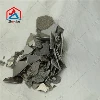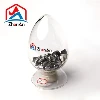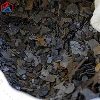

Q1. What sizes are most commonly offered for FeV50?
Producers typically supply FeV50 in two broad ranges, each suited to different furnace habits:
| Common Size Range | Typical Use Case |
|---|---|
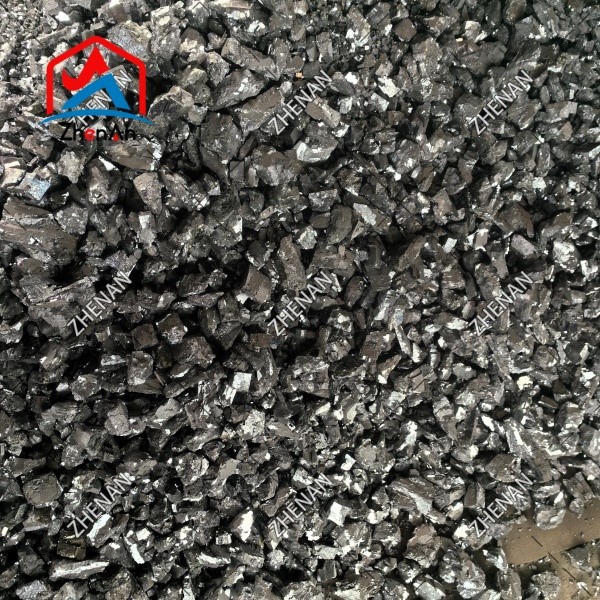
| 10–50 mm | Widely used in BOF/EAF tapping and ladle additions; stable melting speed. |
| 10–60 mm | Preferred when operators want slightly slower dissolution or reduced fines. |
| Fines <10 mm | Usually minimized; high surface area leads to oxidation loss. |
Mills rarely accept excessive fines because they distort alloy yield and recovery predictability.
Q2. Why does size matter so much in FeV50 dissolution?
FeV50 must dissolve quickly enough to distribute vanadium evenly, but not so fast that oxidation spikes or yield drops. Size determines:
surface area available for reaction,
melting speed,
oxygen exposure,
vanadium recovery consistency,
timing of VC/VN formation within the melt path.
Oversized pieces can linger in the furnace and reduce recovery; undersized pieces oxidize too aggressively.
Q3. Which size range provides the best balance for modern steelmaking?
For most BOF and EAF routes, 10–50 mm is considered the most reliable "all-purpose" range. It offers:
fast but controlled dissolution during tapping,
stable recovery across heats,
predictable interaction with slag,
lower fines generation during transport and charging.
This is why many mills specify 90–95% of material within this bracket for routine FeV50 additions.
Q4. When would a mill prefer larger granularity such as 10–60 mm?
Some operations intentionally choose a slightly coarser range:
High tapping temperatures: slower dissolution prevents vanadium loss.
Longer refining time: less surface area reduces oxidation at the slag–metal interface.
Strict inclusion-control programs: larger particles help avoid premature reaction peaks.
However, mills must still avoid excessive oversize, as pieces above ~60 mm risk incomplete melting in tight-timing processes.
Q5. How should mills evaluate FeV50 size distribution on a COA?
The COA should reflect not just the nominal range, but the percentage of mass in each bracket. A practical evaluation looks like this:
| Size Bracket | What Mills Typically Expect |
|---|---|
| >50 or >60 mm | Very limited; avoids slow or incomplete melting. |
| 10–50 mm or 10–60 mm | Majority of the mass; ensures predictable melt behavior. |
| <10 mm fines | Minimal; keeps oxidation and yield loss under control. |
Consistency across lots is more important than having a perfectly narrow range.

about Us
If you're selecting FeV50 for BOF or EAF operations, the ideal size depends on your melt time, tapping temperature, recovery targets, and impurity limits-not just the nominal vanadium grade.
We supply FeV40, FeV50, FeV60, and FeV80 with stable granularity control in 10–50 mm and 10–60 mm ranges.
If you want a size recommendation and a precise quotation, just share:
grade / size / quantity / destination / shipment window.
I'll prepare a clear, spec-matched offer together with COA details.