

Quick Answer: Silicon metal, also called industrial silicon or metallic silicon, is an industrial form of elemental silicon produced by reducing silica with carbon in an electric furnace. Commercial grades such as 553, 441, 3303, 2202 and 1101 are mainly distinguished by their Fe, Al and Ca impurity limits. Silicon metal is widely used in aluminum alloys, silicon-based chemical production and other metallurgical processes. For purchasing, grade name, actual batch chemistry, particle size and COA should be checked together.
What Is Silicon Metal?
Silicon metal is a refined industrial form of elemental silicon. It is produced from silica, normally quartz, through high-temperature carbothermic reduction.
In international trade, you may also see it called:
- Industrial silicon
- Metallic silicon
- Metal silicon
- Silicon metal
Commercial silicon metal normally contains silicon as the dominant element, while Fe, Al, Ca and other trace elements are controlled according to the ordered grade.
It is commonly supplied as crushed lumps, granules or powder. The physical form does not define the chemical grade: for example, the same silicon metal grade can be supplied in different particle-size ranges.
For available grades and product forms, see our silicon metal product range.
Physical and Chemical Properties of Silicon Metal
Silicon has a characteristic combination of relatively low density, high melting temperature and brittle crystalline structure.
| Property | Typical Value / Description |
|---|---|
| Chemical symbol | Si |
| Appearance | Gray to metallic-gray crystalline solid |
| Density | About 2.33 g/cm³ |
| Melting point | About 1,414°C |
| Physical behavior | Hard and brittle in solid form |
For industrial users, these intrinsic properties are useful background, but the more important commercial properties are usually chemical grade, impurity profile, particle size and batch consistency.
Two silicon metal products can have essentially the same fundamental physical properties while differing significantly in Fe, Al and Ca content.
How Is Silicon Metal Produced?
Industrial silicon is produced through carbothermic reduction of silica in an electric submerged-arc furnace.
The main raw-material groups are:
- Quartz or another silica source – supplies SiO2
- Carbonaceous reducing materials – such as selected coal, coke or other carbon sources
- Electrical energy – provides the high furnace temperature required for reduction
At high temperature, silica is reduced and oxygen is removed through reactions with carbon. The overall process produces molten silicon together with carbon-containing furnace gas.
The recovered silicon is then:
- Tapped from the furnace
- Refined or treated as required
- Cast and cooled
- Crushed and screened
- Separated into the required particle-size range
Because furnace operation and raw-material quality affect impurity levels, silicon metal is ultimately sold against a chemical specification rather than simply as "elemental silicon."
How Silicon Metal Grade Codes Work
Commercial silicon metal is commonly identified by grade codes such as 553, 441, 3303, 2202 and 1101.
These numbers are mainly used to indicate the maximum Fe, Al and Ca limits.
| Grade | Fe Max. | Al Max. | Ca Max. | Code Meaning |
|---|---|---|---|---|
| 553 | 0.50% | 0.50% | 0.30% | 5 / 5 / 3 |
| 441 | 0.40% | 0.40% | 0.10% | 4 / 4 / 1 |
| 3303 | 0.30% | 0.30% | 0.03% | 3 / 3 / 03 |
| 2202 | 0.20% | 0.20% | 0.02% | 2 / 2 / 02 |
| 1101 | 0.10% | 0.10% | 0.01% | 1 / 1 / 01 |
For example, 553 represents Fe ≤0.50%, Al ≤0.50% and Ca ≤0.30%, while 2202 applies much tighter limits of Fe ≤0.20%, Al ≤0.20% and Ca ≤0.02%.
This does not mean that a lower-number grade is automatically "better." It means the impurity limits are tighter.
The correct grade is the one that meets the downstream process requirements without unnecessary over-specification.
If you want a more detailed explanation of the numbering system, see our guide to silicon metal grades.
Silicon Metal Grade and Actual COA Are Different
The grade defines the accepted composition limits. The batch COA shows the actual chemistry measured for a production lot.
For example, a 441 specification may allow:
- Fe ≤0.40%
- Al ≤0.40%
- Ca ≤0.10%
An actual batch might test well below all three limits and still remain a 441-grade product.
For repeat procurement, this distinction matters because two suppliers can offer the same nominal grade while their actual batch chemistry and lot-to-lot variation differ.
Our guide to silicon metal purity and batch stability explains how to compare several COAs rather than relying on a single certificate.
Main Uses of Silicon Metal
Aluminum Alloy Production
Silicon metal is widely used as a silicon-bearing addition in aluminum alloys, especially casting alloys.
Silicon can influence:
- Casting fluidity
- Solidification behavior
- Shrinkage characteristics
- Mechanical and wear-related properties of the final alloy
The appropriate silicon metal grade depends on the impurity budget of the aluminum alloy rather than on a fixed rule that one alloy must always use one silicon grade.
If your main application is aluminum alloying, see how to choose silicon metal grades for aluminum alloys.
Chemical Production
Silicon metal is also an important raw material in silicon-based chemical production, including the manufacture of organosilicon intermediates and other silicon-containing chemicals.
Chemical processes may place different limits on Fe, Al, Ca and trace elements, so a grade suitable for one process should not automatically be assumed suitable for another.
Other Metallurgical Uses
Silicon metal can also be used as a silicon addition or reducing material in selected metallurgical processes.
In these applications, the required silicon content, impurity limits, particle size and reaction conditions should be defined according to the process rather than simply selecting the highest-purity grade available.
Silicon Metal Product Appearance
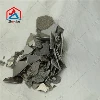
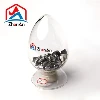
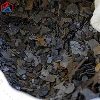
Commercial silicon metal is typically crushed after solidification and supplied as irregular gray or metallic-gray pieces. Appearance can help check size, fines and visible contamination, but it cannot identify the chemical grade reliably.
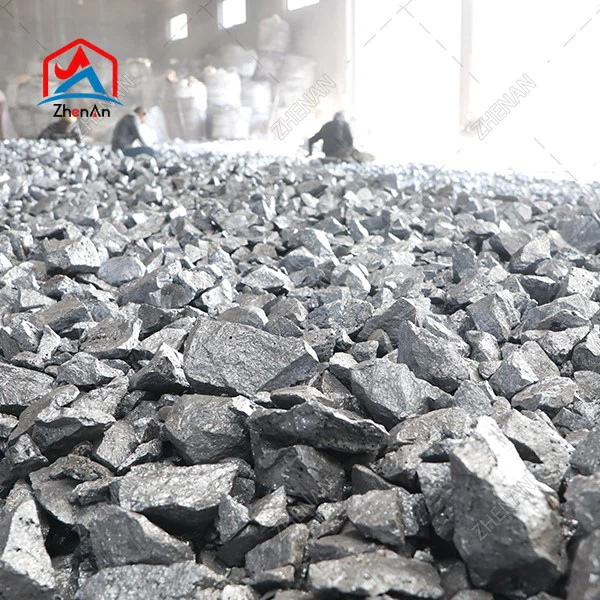

The actual grade should be confirmed from the agreed specification and batch COA rather than from color or visual appearance.
Why Silicon Metal Quality and Batch Consistency Matter
Silicon metal is often traded as a commodity, but simply meeting a grade name does not guarantee that every shipment will have identical chemistry or particle-size distribution.
For industrial use, quality evaluation should normally include:
| Check | What It Tells You |
|---|---|
| Batch COA | Actual Si, Fe, Al, Ca and other required chemistry of the tested lot |
| Several recent COAs | Whether chemistry remains reasonably consistent between batches |
| Particle size | Whether lump size matches charging or melting requirements |
| Fines / oversize | Whether excessive breakage or poor screening affects delivered material |
| Lot traceability | Whether the COA can be linked to the shipment received |
A better purchasing question is therefore not simply "Is this 553 or 441?" but "Does this batch consistently stay inside the impurity and size limits required by our process?"
Particle Size and Packing
Silicon metal is available in different crushed sizes according to melting, charging and downstream processing requirements.
Common commercial ranges include:
- 10–100 mm
- 10–60 mm
- 10–50 mm
- 3–10 mm
- Smaller granules or powder where required
The correct size should be matched to the actual process. Smaller pieces provide greater surface area, but excessive fines can increase dust, oxidation and handling losses.
For bulk export orders, the packing specification should also define bag type, net weight and any moisture-protection requirement.
Storage and Handling of Silicon Metal
Silicon metal lumps should be stored in a clean, dry area and protected from water ingress, contamination and unnecessary breakage.
Fine silicon powder requires additional attention because finely divided elemental silicon can present a combustible-dust hazard.
When handling powder or significant fines:
- Control airborne dust
- Avoid unnecessary dust accumulation
- Control ignition sources according to the site risk assessment
- Use appropriate PPE
- Follow the SDS supplied for the specific product form
Safety requirements should be based on the actual particle size and supplied product rather than treating lump silicon and silicon powder as identical handling risks.
What to Confirm Before Buying Silicon Metal
| Item | What to Specify |
|---|---|
| Grade | 553, 441, 3303, 2202, 1101 or another required specification |
| Chemistry | Si together with required Fe, Al, Ca and other impurity limits |
| Particle size | Required lump, granule or powder range |
| Fines / oversize | Acceptance tolerance where size consistency matters |
| Batch COA | Actual chemistry linked to the supplied production lot |
| Packing | Required bag type and net weight |
An RFQ that specifies only "silicon metal" is usually not enough. Grade, chemistry and particle size should be defined first so different quotations represent comparable material.
Need to Compare Silicon Metal Grades?
Send your required grade, Fe/Al/Ca limits, particle size, quantity and destination port. We can compare available silicon metal specifications and provide recent batch COA data before quotation.
FAQ About Silicon Metal
What is silicon metal made of?
Silicon metal consists mainly of elemental silicon, with Fe, Al, Ca and other impurities controlled according to the commercial grade and purchase specification.
Is silicon metal the same as silica?
No. Silica is silicon dioxide, SiO2. Silicon metal is elemental silicon produced by reducing silica at high temperature.
What do Silicon Metal 553 and 441 mean?
The numbers indicate the main Fe, Al and Ca impurity limits. For example, 553 corresponds approximately to Fe ≤0.50%, Al ≤0.50% and Ca ≤0.30%, while 441 uses tighter limits of 0.40%, 0.40% and 0.10%.
Is Silicon Metal 1101 always better than 553?
No. 1101 has much tighter impurity limits, but a lower-impurity grade only provides value when the downstream process requires it. If 553 already meets the chemistry requirement, choosing 1101 may unnecessarily increase raw-material cost.
How is silicon metal produced?
Industrial silicon is produced by carbothermic reduction of silica in an electric submerged-arc furnace. The resulting silicon is tapped, cooled, crushed and screened into the required particle size.
What is silicon metal used for?
Major applications include aluminum alloy production, silicon-based chemical manufacturing and selected metallurgical processes where silicon is used as an alloying or reducing material.
Why should I check the silicon metal COA?
The grade defines the required limits, while the COA shows the actual chemistry of the tested production lot. Comparing several recent COAs can also help evaluate batch-to-batch consistency.
Is silicon metal powder combustible?
Fine elemental silicon powder can present a combustible-dust hazard. Dust control, ignition-source management, PPE and storage procedures should follow the SDS and the site's workplace risk assessment.