
Introduction
Ferrovanadium (FeV) is one of the most important alloying materials used in modern steelmaking. As global industries demand stronger, more durable, and more cost-efficient steel, ferrovanadium provides a reliable solution through its superior ability to improve grain refinement, hardness, and high-temperature strength. However, for international buyers-especially steel mills, alloy distributors, and metal traders-understanding how ferrovanadium is produced and how to evaluate its quality is essential.
Different production methods lead to variations in purity, stability, and cost. Likewise, chemical composition and impurity control directly affect steel performance. This article provides a detailed overview of the two dominant production processes, key evaluation standards, impurity control requirements, packaging methods, and quality factors that overseas buyers should pay attention to when sourcing FeV50 or FeV80.
Q1: What are the major production processes of ferrovanadium, and which method produces higher quality?
Ferrovanadium is primarily produced through two industrial methods: the aluminothermic reduction process and the silicon reduction (silicothermic) process. Each method has its own advantages depending on raw material availability, product requirements, and production cost.
1. Aluminothermic Reduction Process (Al-Thermic Method)
This method uses aluminum as a reducing agent to extract vanadium from raw materials such as vanadium pentoxide (V₂O₅).
How It Works
V₂O₅ reacts with aluminum powder at high temperature.
Aluminum reduces vanadium oxide to metallic vanadium.
The molten vanadium mixes with iron to form ferrovanadium alloy.
Advantages
Lower production cost
Simpler equipment requirements
Suitable for FeV50 production
Disadvantages
Higher aluminum content in final product
More impurities compared to the silicon method
Not ideal for producing high-purity FeV80
As a result, aluminothermic FeV is widely used in general steelmaking but may not meet the highest purity requirements for tool steels or aerospace applications.
2. Silicon Reduction Process (Silicothermic Method)
This process uses ferrosilicon as the reducing agent. It is considered the most stable and widely used industrial method for high-quality ferrovanadium production.
How It Works
Ferrosilicon reacts with vanadium oxides under controlled conditions
Silicon reduces V₂O₅ → metallic vanadium
Vanadium forms alloy with molten iron
Advantages
Lower impurity levels (especially Al and O)
Better chemical stability
Suitable for FeV80 or ultra-low impurity alloys
Higher consistency between batches
Disadvantages
Higher production cost
More complex equipment
Silicothermic production is preferred by top-tier steel mills producing high-strength steel, HSLA steel, and tool steel.
Which Method Produces Better Ferrovanadium?
If purity and consistency are priorities, the silicon reduction method is superior.
This method produces ferrovanadium with:
Lower Al, O and Si remnants
More uniform microstructure
Greater mechanical performance in steel applications
For buyers seeking high-performance FeV80, the silicothermic method is the industry standard
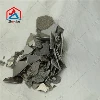
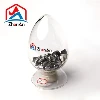
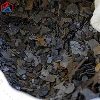
FeV Alloy Products Detailed


Q2: How to evaluate whether ferrovanadium meets international quality standards?
When purchasing ferrovanadium, most buyers focus on vanadium content. But high-quality FeV involves much more. International standards such as ASTM, EN, ISO, and GB/T define detailed chemical requirements to ensure product quality and steel performance.
Below are the key parameters every buyer must evaluate:
1. Vanadium Content (V%)
This is the most critical indicator of ferrovanadium quality.
Common grades include:
·FeV50 (V content: 50% ± 2%)
·FeV80 (V content: 78–82%)
Higher V% usually means a stronger strengthening effect and better cost efficiency per unit of vanadium.
2. Impurities: C, P, S, Si, Al
Impurities significantly influence steel properties.
Buyers should pay close attention to:
| Element | Impact | Typical Requirement |
|---|---|---|
| C (Carbon) | Affects steel toughness | < 0.2% |
| P (Phosphorus) | Brittle tendency | < 0.05% |
| S (Sulfur) | Decreases ductility | < 0.05% |
| Si (Silicon) | Residue from silicothermic process | Controlled based on grade |
| Al (Aluminum) | Too high affects weldability | < 1% (varies by grade) |
Low impurities are especially important for:
·Automotive steels
·Aerospace materials
·High-speed tool steels
·High-strength low- alloy steels (HSLA)
3. Particle Size and Uniformity
Buyers often require specific particle sizes (10–50 mm, 10–80 mm, etc.).
Uniform size means:
·More consistent melting
·Better alloy distribution
·Reduced alloy consumption
Some mills also request customized sizes for automated alloy feeding systems.
4. Microstructure Stability
High-quality ferrovanadium has:
·Uniform distribution of V, Fe, and alloy phases
·Minimal porosity
·High density and smooth fracture surface
This directly affects melt efficiency and strengthening effect.
5. Third-Party Testing (SGS, BV, Intertek)
Reliable suppliers always provide:
·Chemical composition report
·Batch number tracking
·Test certificates (MTC)
·Third-party verification if required
This ensures transparency and trust for international buyers.
Q3: What are the standard packaging and export requirements for ferrovanadium?
Since ferrovanadium is exported worldwide, proper packaging is essential to protect the product during long sea shipments.
1. Common Packaging Types
·1-ton jumbo bags (most popular)
·25–50 kg inner bags + 1-ton outer bag
·Steel drums (for special high-purity products)
·Moisture-proof plastic film lining
The choice depends on:
·Customer preference
·Transportation environment
·Alloy type (FeV50 / FeV80)
2. Export Safety Requirements
While ferrovanadium is not classified as a dangerous good, proper handling is required:
·Must remain dry at all times
·Avoid impact or crushing during transport
·Use pallets for forklift operations
·Moisture-proof container loading in coastal regions
Good packaging not only protects the product but also reflects supplier professionalism.
3. Labeling Requirements
Export-quality packaging typically includes:
·Product name
·Grade (FeV50 / FeV80)
·Net weight / Gross weight
·Batch number
·Supplier name
·Country of origin
·Safety instructions
Proper labeling helps buyers conduct quality traceability and comply with customs documentation.
Conclusion
Understanding the production methods and evaluation standards of ferrovanadium is essential for making informed purchasing decisions. The silicon reduction method is widely recognized for producing high-purity, low-impurity ferrovanadium, making it ideal for high-performance steel applications. Meanwhile, strict control of vanadium content, impurities, particle size, and packaging ensures consistent alloy performance in steelmaking.
As a professional ferrovanadium manufacturer and exporter, our company provides FeV50 and FeV80 with stable composition, low impurities, and excellent batch consistency.
We use advanced silicothermic production technology, support third-party testing (SGS, BV, Intertek), and offer safe export packaging designed for long-distance sea transportation.
Whether you are a steel mill, distributor, or alloy trader, we can supply reliable, high-purity ferrovanadium with competitive pricing and long-term stability. Contact us for samples, technical data sheets, or customized specifications-we are ready to support your business with high-quality products and professional service.