
The Wear Problem in Heavy Equipment
FeV80 ferrovanadium is widely used in the production of wear-resistant steel, helping manufacturers solve one of the most costly problems in heavy industry: rapid component wear caused by abrasion and impact. Industries such as mining, construction and cement production rely on equipment that operates under extremely harsh conditions. Components like crusher liners, excavator teeth and grinding equipment are constantly exposed to abrasive materials and mechanical stress. Without sufficient wear resistance, these parts deteriorate quickly, leading to frequent maintenance and equipment downtime. Through vanadium microalloying, FeV80 significantly enhances hardness, microstructure stability and resistance to abrasion.
Typical Applications of FeV80-Strengthened Steel
Steels strengthened with FeV80 ferrovanadium are widely used where components must withstand extreme wear. Typical applications include mining equipment components, crusher liners and plates, excavator bucket teeth, cement grinding equipment and heavy construction machinery. In these applications, equipment parts must resist abrasion while maintaining structural integrity under heavy loads, and the vanadium addition helps producers manufacture durable components that last longer in service.
How FeV80 Improves Performance
When FeV80 ferrovanadium is added during steelmaking, vanadium forms extremely hard particles known as vanadium carbides. These carbides are hard and stable particles that protect the steel matrix from abrasive wear, acting as microscopic barriers that resist scratching and surface damage caused by abrasive materials. The presence of vanadium carbides increases the hardness of the steel while maintaining good toughness, and this combination significantly improves abrasion resistance in harsh operating environments.
Service Life and Operating Benefits
Because of improved wear resistance, steel components produced with FeV80 can operate longer before replacement. Longer service life provides several practical advantages: reduced maintenance costs, less equipment downtime, higher operational efficiency and improved equipment reliability. These benefits explain why many manufacturers use FeV80 ferrovanadium in wear-resistant steel production.
Supply and Specification Notes
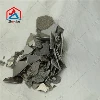
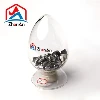
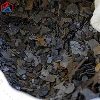
FeV80 is one of the common ferrovanadium grades, positioned with a higher vanadium content than FeV40, FeV50 and FeV60. Typical commercial ranges for the common grades are about 38-45% vanadium for FeV40, 45-55% for FeV50, 58-65% for FeV60 and 78-82% for FeV80. Standard particle sizes such as 3-20 mm and 10-50 mm are commonly supplied, and the material typically appears as silver-gray or gray metallic lumps with a melting point of about 1800°C. Each shipment should carry a Certificate of Analysis reporting the vanadium content and the agreed impurity lines, and delivery times normally follow the order quantity and market availability.
FAQ
Q: What grades of ferrovanadium are commonly supplied?
A: The common grades are FeV40, FeV50, FeV60 and FeV80. Each grade has a different vanadium content and is used for different alloying requirements in steel production.
Q: What is the vanadium content of FeV80?
A: FeV80 typically contains about 78-82% vanadium, which is higher than FeV40, FeV50 and FeV60 and suited to demanding alloying applications.
Q: How does FeV80 make steel more wear-resistant?
A: Vanadium forms hard vanadium carbides in the steel matrix. These carbides raise hardness and abrasion resistance while preserving toughness, so components resist scratching and surface damage longer.
Q: What particle sizes are available?
A: Standard sizes such as 3-20 mm and 10-50 mm are commonly supplied. Specific size requirements can be confirmed against the plant charging practice.
Q: What documentation should accompany a FeV80 shipment?
A: A Certificate of Analysis covering the chemical composition of the specific batch, including vanadium and the agreed impurity lines, so buyers can confirm the material meets their requirements.
Q: What is the typical delivery time?
A: For stock goods, delivery is usually around 15 days. Quotations are confirmed based on product grade, order quantity and destination because ferrovanadium prices change with the market.