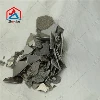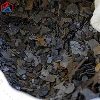

Choosing between FeSi 72 and FeSi 75 looks simple-one has a higher silicon level, so it costs more. But in real procurement, the best choice depends on your process objective, dosing method, cost model, and quality risk tolerance. If you buy purely on price, you may pay more in yield loss or process instability. If you buy purely on premium grade, you may over-specify and raise costs without measurable benefits.
Here's a practical buyer's guide to making the right decision.
1) The Core Difference: Silicon Contribution and Efficiency
The main difference is the silicon level. FeSi 75 typically provides:
- higher silicon contribution per ton
- slightly different dosing economics
- a common premium due to production and quality control
If your process requires higher silicon input with fewer additions, FeSi 75 may reduce dosing steps and simplify control. If your requirement is routine deoxidation and cost efficiency, FeSi 72 often performs well.
2) Application-Driven Selection (Steelmaking vs Foundry)
Steelmaking deoxidation and alloying
- FeSi 72 is often chosen for routine deoxidation and standard alloying.
- FeSi 75 is often chosen when a plant prefers higher silicon contribution, tighter process control, or specific internal standards.
Foundry applications
Foundries may choose based on their casting practice and feeding method. Consistency, sizing, and impurity control may matter more than the difference between 72 and 75.
3) Cost Model: Don't Compare Only Per-Ton Price
A smarter comparison is cost per effective silicon addition. Ask yourself:
- how much silicon do you need to add per heat/batch?
- what is the recovery rate in your process?
- does higher grade reduce material usage or improve recovery?
In some plants, FeSi 75's premium is justified if it reduces total consumption or improves process stability. In others, FeSi 72 is the best balance.
4) Impurity Control and Aluminum Level
For many buyers, the real decision isn't 72 vs 75-it's standard vs low-Al or tighter impurity limits. If your downstream process is sensitive, focus on:
- carbon / phosphorus / sulfur limits
- aluminum requirement (standard or low-Al)
- batch consistency
A well-controlled FeSi 72 can outperform a loosely controlled FeSi 75 in real operations.
5) Particle Size and Feeding Method
If you use bulk addition, consistent lump size matters. If you use more controlled dosing, different size ranges may work better. When size and fines are not controlled, you can lose efficiency regardless of grade.
6) A Practical Rule of Thumb
- Choose FeSi 72 if your priority is cost-performance for routine use and your process can achieve stable results with standard silicon contribution.
- Choose FeSi 75 if you need higher silicon contribution, tighter internal standards, or prefer stronger process control and dosing efficiency.
- In both cases, specify impurity limits and size clearly to avoid "grade-only" purchasing mistakes.


Company Background
ZHEN AN INTERNATIONAL CO., LIMITED supplies ferrosilicon 72 and 75, along with silicon metal, calcium silicon products, and electrolytic manganese flakes, to industrial customers worldwide. The company supports buyers with stable quality control, export-ready packaging, and reliable shipment coordination.