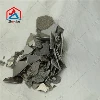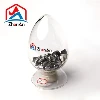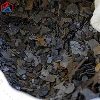

Ferrovanadium 40 and ferrovanadium 60 are two grades of the same product family: an iron-vanadium ferroalloy used to introduce vanadium into steel and certain alloys. The grade number primarily indicates the approximate vanadium content level, and that single difference drives most of the practical consequences buyers care about. In procurement and production, the key is not to treat grade labels as marketing terms. Treat them as dosing tools: different vanadium density changes addition weight, handling, and the economics of "cost in use."
To make the comparison useful, it helps to evaluate the differences through four buyer-relevant lenses: vanadium units per ton, operational dosing control, economic comparison method, and specification discipline.


Vanadium units per ton: the defining difference
The fundamental distinction is that ferrovanadium 60 contains more vanadium units per ton than ferrovanadium 40. If your goal is to add a fixed amount of vanadium into a melt, you will need less ferrovanadium 60 to deliver the same vanadium input, and more ferrovanadium 40.
This matters because alloying additions are constrained by real plant conditions: available time, mixing intensity, charging method, and the tolerance of your process to variation. Lower addition mass can be advantageous for speed and logistics. Higher addition mass can sometimes be advantageous for control, depending on your dosing routine.
Dosing and control: why "lower grade" can be the right grade
Because ferrovanadium 60 is more concentrated, it typically reduces addition weight. This can improve logistics efficiency and reduce the number of bags or drums you handle to achieve the same vanadium target. It can also be preferred when storage capacity is limited or when the dosing system is optimized for smaller additions.
Ferrovanadium 40 may be preferred in operations where a larger addition weight provides smoother control. In some melt practices, operators prefer the ability to adjust chemistry in smaller "vanadium steps" with a larger addition mass rather than using a more concentrated alloy where small weighing differences translate into larger chemistry changes. In that sense, ferrovanadium 40 can feel more forgiving operationally.
How to compare price correctly: do not compare per ton only
A common procurement mistake is to compare ferrovanadium 40 and ferrovanadium 60 by price per ton, then assume the lower price is automatically better value. The academically cleaner method is to normalize to vanadium units:
- Determine the vanadium units you need in the final steel.
- Convert that into required addition weight for each grade.
- Consider your effective recovery (based on your process).
- Compare cost per effective vanadium unit delivered.
This calculation often changes the decision. Ferrovanadium 60 may look expensive per ton but can be efficient on a per-vanadium basis. Ferrovanadium 40 may be cheaper per ton but require significantly more tonnage to deliver the same vanadium input.
A second economic layer is handling and loss. If a grade tends to generate more fines or is harder to dose consistently in your system, the "real cost" can rise due to dust loss, slower operations, or rework.
Physical behavior in use: size distribution and dissolution matter
In steelmaking, ferrovanadium is added into a molten bath. The goal is predictable dissolution and repeatable vanadium recovery. While ferrovanadium 40 and 60 are the same category of ferroalloy, they can show different behavior under constrained conditions. More concentrated grades can be more sensitive to your process window if you have limited temperature margin or weak stirring. Under well-controlled conditions, both grades can perform reliably.
In practical buying, the physical form is often more influential than the grade label. If the lot has a broad size distribution, excess fines, or poor packing integrity, you can see variable recovery even if chemistry is compliant. That is why sizing and fines control should be specified for either grade.
Specification discipline: what should be written in the purchase order
Regardless of whether you buy ferrovanadium 40 or 60, the purchase order should control:
- Vanadium content range for the grade
A short list of critical impurity limits relevant to your steel grade
- Lump size range and a practical fines tolerance
- Batch-linked COA where the lot number matches packing marks and aligns with the packing list
- Clear packing format and labeling requirements
This specification discipline is what turns a grade label into a repeatable supply program.
A practical selection framework
If you want a simple decision rule:
- Choose ferrovanadium 60 when you want higher vanadium density, lower addition mass, and your melt practice supports consistent dissolution and mixing.
- Choose ferrovanadium 40 when dosing control benefits from a larger addition weight or when your operation prefers more incremental adjustment.
Then validate the choice with a unit-based cost comparison and strict control of sizing, fines, and documentation.
FAQ
Q1: What is the main difference between ferrovanadium 40 and ferrovanadium 60?
A: Vanadium concentration. Ferrovanadium 60 delivers more vanadium units per ton, reducing the addition weight needed to reach the same target.
Q2: Is ferrovanadium 60 always the better option?
A: Not always. The best choice depends on dosing control, melt practice, and cost per effective vanadium unit delivered.
Q3: How should I compare the two grades economically?
A: Compare cost per effective vanadium unit delivered, considering your recovery and handling loss, rather than comparing price per ton alone.
Q4: Do sizing and fines matter for both grades?
A: Yes. Size distribution and fines ratio influence handling loss and dissolution behavior, affecting recovery and repeatability.
Q5: What should I specify in the purchase order?
A: Vanadium range, critical impurity limits, lump size range and fines tolerance, and batch-linked COA traceability.
About Our Company
We are a factory direct supply partner with stable monthly supply capacity and a factory area of about 30,000 m². Our products are exported to 100+ countries and regions, and we have served 5,000+ customers. Our sales team understands industry dynamics and market trends, and we supply ferrosilicon, silicon metal, and other metallurgical products.