

In industrial and international trade, silicon metal is not a single standardized product. It is supplied in different types, which are defined by a combination of:
grade / purity positioning
application focus
physical form (shape and size)
For buyers, understanding both grade and form is essential. Choosing the correct grade but the wrong form-or vice versa-can negatively affect handling efficiency, reaction behavior, and total production cost.
1) Types of silicon metal by grade (chemical positioning)
Silicon metal grades are commercial classifications that reflect typical impurity positioning and usage direction rather than laboratory purity alone.
Silicon Metal 553
A cost-oriented industrial grade used in large-volume applications where impurity tolerance is relatively flexible.
Typical uses:
- aluminum alloy production
- metallurgical and industrial processes
- cost-sensitive purchasing programs
Silicon Metal 441
A mainstream grade offering a balance between usability and impurity control.
Typical uses:
- aluminum alloying
- chemical and silicone-related supply chains
- general industrial use
Silicon Metal 421
A grade with tighter impurity control than 441, selected when consistency requirements are higher.
Typical uses:
- aluminum plants with stricter standards
- chemical processes requiring stable feedstock
Silicon Metal 3303
A widely used grade in aluminum plants and continuous industrial production, valued for cost-performance balance.
Typical uses:
- aluminum alloy production
- chemical and silicone feedstock
- metallurgical applications
Silicon Metal 2202
A higher-requirement industrial grade with stricter impurity positioning.
Typical uses:
- specialty aluminum alloys
- sensitive chemical processes
Silicon Metal 1101
A premium, high-purity grade used when trace impurity control is critical.
Typical uses:
- electronics-related materials
- photovoltaic and semiconductor-associated supply chains
- high-end chemical applications
2) Types of silicon metal by physical form (shape and size)
Beyond grade, silicon metal is also classified by physical form, which directly affects handling, reaction speed, and recovery rate.
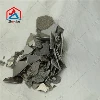
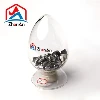
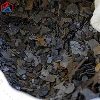
A) Silicon Metal Lumps
Silicon metal lumps are the most common form in global trade. They are produced by crushing and screening silicon metal ingots into controlled size ranges.
Key characteristics:
- solid lump form
- available in multiple size ranges
- easy to handle and transport
Typical applications:
- aluminum alloy production
- metallurgical furnaces
- bulk industrial use
For aluminum plants and metallurgical users, silicon lumps are preferred because they offer stable feeding behavior and predictable melting characteristics.
B) Silicon Metal Powder
Silicon metal powder is produced by further crushing and milling silicon metal lumps into fine particles with controlled mesh sizes.
Key characteristics:
- fine particle size (e.g. 16–200 mesh)
- larger surface area
- faster reaction speed
Typical applications:
- chemical and silicone production
- metallurgical reactions requiring fast kinetics
- specialty industrial processes
Because of its higher reactivity and handling sensitivity, silicon metal powder usually requires stricter packaging, moisture control, and storage management compared with lump material.
3) How grade and form work together in real applications
In practice, buyers do not choose grade or form separately-they choose a combination:
- Aluminum plants often buy silicon metal 441 or 3303 in lump form
- Chemical producers may use 441 / 3303 / 2202 in powder form
- High-end users may specify 1101 grade with controlled size or powder
Selecting the right combination improves efficiency and reduces hidden costs such as oxidation loss, handling waste, and inconsistent reaction behavior.
4) Why choosing the right type of silicon metal matters
Using the wrong type can lead to:
- inefficient melting or reaction
- higher material loss
- unstable product quality
- unnecessary procurement cost
Professional buyers evaluate silicon metal based on:
- downstream process sensitivity
- required reaction speed
- handling and feeding systems
- total supply-chain risk
FAQ
Q1: What are the main types of silicon metal?
A: By grade, common types include 553, 441, 421, 3303, 2202, and 1101. By form, silicon metal is mainly supplied as lumps or powder.
Q2: What is the difference between silicon metal lumps and powder?
A: Lumps are used for bulk alloying and metallurgical applications, while powder is used where faster reaction or finer control is required.
Q3: Which form is better for aluminum alloy production?
A: Most aluminum plants use silicon metal in lump form due to stable feeding and melting behavior.
Q4: Is silicon metal powder more expensive than lumps?
A: Powder typically involves additional processing and handling requirements, which can increase cost.
Q5: Can suppliers provide both forms with stable monthly supply?
A: Yes. With proper production planning, stable monthly supply of both lumps and powder can be arranged.
About Our Company
We are a factory-direct manufacturer and exporter of metallurgical products with a production base of about 30,000 square meters and stable monthly supply capacity. Our products are exported to more than 100 countries and regions, and we have established cooperation with over 5,000 customers worldwide. Our sales team understands both grade selection and form selection, helping buyers choose the right silicon metal solution for their application.
In addition to silicon metal (lumps and powder), we also supply ferrosilicon, electrolytic manganese metal, ferrovanadium, and other metallurgical products. Share your application, required grade, form, and delivery plan-we will support you with a professional quotation and reliable supply solution.