
Both silicon metal powder and lump silicon metal are important industrial raw materials, but they are not interchangeable in every situation. Understanding the difference between them helps buyers select the right form for their process and cost structure.
Form and Physical Properties
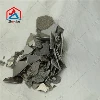
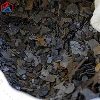
- Lump silicon metal is supplied in blocks or pieces, usually in specified size ranges such as 10–100 mm.
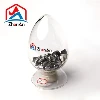
- Silicon metal powder is finely ground material, often in mesh ranges like 16–200 mesh or customized distributions.
As a result, powder has a much larger specific surface area, which affects reaction speed and mixing behavior.
Handling and Feeding
- Lumps are typically added manually or with mechanical feeders into furnaces or mixers.
- Powders require more attention to dust control, dosing systems and flowability.
In automated processes, silicon metal powder can offer better precision and consistency when feeding small or exact quantities.
Reactivity and Performance
- Silicon metal powder reacts faster due to its fine particles and large surface area.
- For applications where quick reaction and uniform mixing are needed, powder has clear advantages.
However, some processes are designed specifically for lump material, and converting to powder may require changes in equipment or operating parameters.
Cost and Total Value
- Silicon metal powder generally has higher processing cost than lumps because of crushing, grinding and screening.
- However, powder can reduce overall cost through higher efficiency, better alloy control and improved product quality.
The best option depends on the customer's process and value calculations.
FAQ – Powder vs Lump Silicon Metal
Q1: Can I simply grind lump silicon metal myself instead of buying powder?
A: In theory it is possible, but in practice, grinding and screening require specialized equipment, safety measures and quality control. For most buyers, purchasing powder from a professional factory is more efficient and reliable.
Q2: Is the chemical composition of powder different from lump material?
A: The powder is produced from specific lump grades, so its chemistry follows the original silicon metal. Slight variations can occur due to processing, but reputable suppliers manage these tightly.
Q3: Which is easier to store, powder or lumps?
A: Lumps are generally simpler to store because they generate less dust. Powders require more attention to dust control and moisture protection.
Q4: When should I definitely choose powder over lumps?
A: When your process needs fine dosing, fast reaction, homogeneous mixing or direct blending with other powders, silicon metal powder is usually the better choice.
Q5: Can one supplier offer both forms?
A: Yes. Many professional silicon metal producers can supply both lump and powder forms, allowing you to optimize your use across different processes.
About Our Company
We are a silicon metal and silicon metal powder manufacturer with a factory covering roughly 30,000 square meters. Our facilities produce both lump silicon metal and silicon metal powder, giving customers the flexibility to choose the form that best fits their process.
Thanks to stable production capacity, we ensure reliable monthly supply for customers in more than 100 countries and regions. Over 5,000 customers have chosen to cooperate with us for their long-term sourcing needs.
Our sales team pays close attention to industry developments and global market trends, helping customers design sourcing strategies that combine lump silicon metal, silicon metal powder, ferrosilicon and other metallurgical products for maximum efficiency.