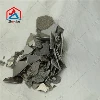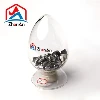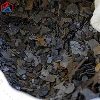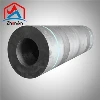

Metallic silicon is categorized based on purity levels, impurity content, and application-specific standards. Below are the primary classifications and grading systems:
1. Classification by Purity and Application
Metallurgical-Grade Silicon (MG-Si):
Purity: 98–99% Si.
Key Impurities: Fe (0.2–0.5%), Al (0.2–0.5%), Ca (0.1–0.3%).
Applications:
Aluminum alloy production (e.g., automotive parts).
Silicones and chemical synthesis.
Steelmaking (as a deoxidizer).
Solar-Grade Silicon (SoG-Si):
Purity: 99.9999% (6N).
Key Impurities: B, P < 1 ppm.
Applications: Photovoltaic solar cells.
Electronic-Grade Silicon (EG-Si):
Purity: 99.9999999% (9N–11N).
Key Impurities: B, P < 0.1 ppb.
Applications: Semiconductors, integrated circuits, microchips.
2. Common Grades and Standards
Chinese Standards (GB/T 2881-2014)
| Grade | Composition (%) | Typical Use |
|---|---|---|
| 553 | Si ≥ 98.5%, Fe ≤ 0.5%, Al ≤ 0.5%, Ca ≤ 0.3% | Aluminum alloys, silicones |
| 441 | Si ≥ 99.0%, Fe ≤ 0.4%, Al ≤ 0.4%, Ca ≤ 0.1% | High-purity alloys, chemicals |
| 3303 | Si ≥ 99.3%, Fe ≤ 0.3%, Al ≤ 0.3%, Ca ≤ 0.03% | Specialty alloys, electronics |
| 2202 | Si ≥ 99.5%, Fe ≤ 0.2%, Al ≤ 0.2%, Ca ≤ 0.02% | Solar-grade refining feedstock |
International Grades
ASTM (USA):
Grade 553: Similar to Chinese 553, used in metallurgy.
Grade 3303: High-purity grade for advanced applications.
EU Standards (EN):
Si-0 (Fe ≤ 0.2%, Al ≤ 0.2%): Ultra-high purity for electronics.
3. Specialty Grades
Chemical-Grade Silicon:
Purity: ~99.5%, optimized for silicone and silane production.
Low trace metals (e.g., Cu, Ti < 0.01%).
Upgraded Metallurgical Silicon (UMG-Si):
Purity: 99.99% (4N), refined via hydrometallurgy or slag treatment.
Used in cost-effective solar cells.
4. Key Factors in Grading
Iron (Fe): Affects conductivity and alloy strength.
Aluminum (Al): Impacts oxidation resistance in alloys.
Calcium (Ca): Reduces slag formation in steelmaking.
Boron (B) and Phosphorus (P): Critical for semiconductor performance (must be < 1 ppm in solar/electronic grades).
5. Global Market Designations
Europe: Often labeled by impurity limits (e.g., "Fe 0.2 max").
Japan: JIS H 2108 standard, similar to ASTM but stricter on B/P content.
India: IS 11108:1984 grades (e.g., Si-98 for general metallurgy).
Note:
Grades like 553 or 2202 are widely recognized in trade, but exact specifications may vary slightly by region.
Higher-grade silicon (e.g., 3303, 2202) commands premium pricing due to stringent refining requirements.
For electronic/solar use, silicon is further processed into polysilicon or monocrystalline ingots.
Applications Summary:
| Grade | Typical Use Cases |
|---|---|
| 553/441 | Aluminum alloys, silicones, refractories |
| 3303/2202 | Solar cell feedstock, specialty chemicals |
| EG-Si (9N+) | Semiconductor wafers, microelectronics |
Standards Reference:
China: GB/T 2881-2014
USA: ASTM A518
EU: EN 13293
Japan: JIS H 2108